Mac Storage Analyzer Tools: Find What's Taking Space in 2025
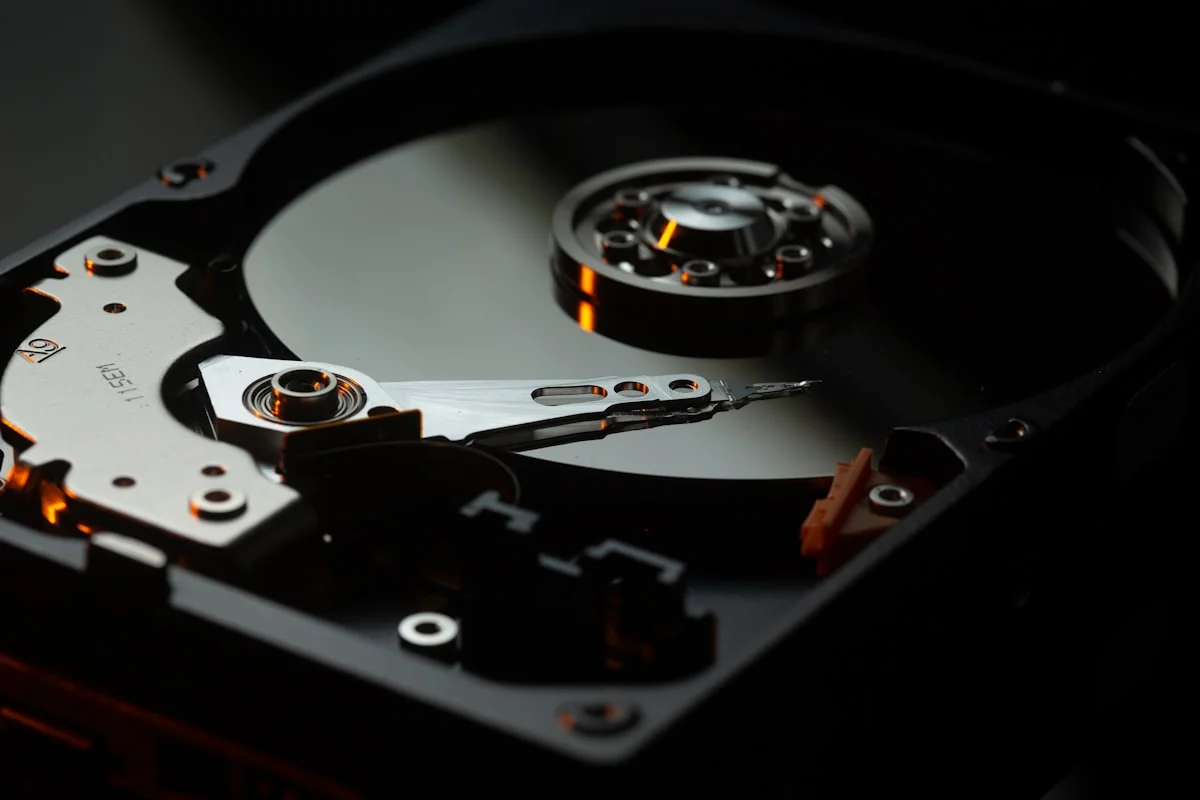
Discover the best free and paid Mac storage analyzer tools to find what's eating your disk space. Compare DaisyDisk, GrandPerspective, OmniDiskSweeper, and built-in macOS tools with detailed reviews.
Running out of storage on your Mac is more than an inconvenience - it can seriously impact system performance. When your drive is over 85% full, macOS struggles to manage virtual memory, cache files, and temporary data. The first step to freeing space is understanding what's consuming it. This comprehensive guide covers the best storage analyzer tools for Mac, from Apple's built-in options to powerful third-party alternatives.
Key Takeaways
- macOS Storage Settings provides a good overview but lacks detailed file-level analysis
- GrandPerspective and OmniDiskSweeper are excellent free options for deep analysis
- DaisyDisk offers the best visual experience for $9.99 one-time purchase
- Terminal commands (
du,ncdu) provide the most accurate results for power users - System Data and Other categories often contain purgeable space that macOS manages automatically
Understanding macOS Storage Categories
Before diving into tools, let's decode what macOS shows in its storage breakdown:
Storage Categories Explained
| Category | What It Contains | Typical Size |
|---|---|---|
| Applications | Installed apps and their bundles | 5-50GB |
| Documents | User files, downloads, desktop items | Varies widely |
| Photos | Photos app library, iCloud photos cache | 1-200GB+ |
| Music | Music app library, podcasts | 1-50GB |
| TV | Apple TV+ downloads, purchased content | 0-100GB+ |
| System Data | Logs, caches, iOS backups, Siri voices | 10-100GB+ |
| macOS | Operating system files | 12-15GB |
| Other | Catch-all for uncategorized files | Highly variable |
The Mystery of "System Data"
Many users are frustrated by the large "System Data" category, which often shows 50-100GB+ but can't be directly examined. This includes:
- Time Machine local snapshots - Backup data stored locally before transferring to external drive
- iOS device backups - Complete backups of iPhones/iPads
- Spotlight indexes - Search database for all your files
- App caches - Data apps store for quick access
- System logs - Diagnostic information
- Virtual memory swap files - Used when RAM is full
- Siri voices and dictation data
Important: Much of System Data is "purgeable" - macOS automatically clears it when space is needed. Don't obsess over this number unless you're critically low on storage.
Built-in macOS Storage Tools
Storage Settings Overview
How to Access:
Apple Menu → About This Mac → More Info → Storage SettingsOr directly:
System Settings → General → Storage
Pros:
- No installation required
- Apple-designed recommendations
- Direct access to cleanup actions
Cons:
- Limited visibility into System Data
- Can't see individual large files
- No visual representation of space usage
Storage Management Recommendations
Click "Storage Settings" to access Apple's built-in recommendations:
Store in iCloud:
- Moves Desktop, Documents, and Photos to iCloud
- Keeps only recently accessed files locally
- Requires sufficient iCloud storage plan
Optimize Storage:
- Removes watched movies and TV shows
- Keeps only recent email attachments
- Automatically manages downloaded content
Empty Trash Automatically:
- Deletes items in Trash after 30 days
- Prevents forgotten files from accumulating
Review Files:
- Lists large files by size
- Shows applications by last used date
- Displays documents by size
Finder-Based Storage Analysis
For quick manual analysis, Finder provides several options:
View Folder Sizes:
Finder → View → Show View Options (Cmd+J) → Calculate all sizesFind Large Files:
1. Open Finder
2. Press Cmd+F
3. Change "Kind" to "File Size"
4. Select "is greater than" → Enter size (e.g., 1GB)
5. Click Save to create Smart Folder for future use
Sort by Size:
Finder → View → List View → Click "Size" column headerFree Storage Analyzer Tools
1. GrandPerspective (Free, Open Source)
Download: grandperspectiv.sourceforge.io
GrandPerspective uses "treemap" visualization to represent files as colored rectangles proportional to their size. It's one of the oldest and most reliable Mac disk analyzers.
Key Features:
- Visual treemap representation of disk usage
- Color-coding by file type or folder
- Quick file identification and deletion
- Free and open source
- No background processes
How to Use:
- Download and install from website
- Click "Scan Folder" or "Scan Volume"
- Select your disk or specific folder
- Wait for scan to complete (2-10 minutes for full disk)
- Hover over rectangles to see file/folder names
- Click to select, then reveal in Finder or delete
Best For: Users who want a reliable, free visual analyzer without ongoing costs
Limitations:
- Interface feels dated compared to modern apps
- No built-in cleanup suggestions
- Requires manual Full Disk Access permission
2. OmniDiskSweeper (Free)
Download: omnigroup.com/more
From the makers of OmniFocus and OmniGraffle, OmniDiskSweeper takes a straightforward approach: it shows folders and files in a list sorted by size.
Key Features:
- Simple, clean interface
- Hierarchical size display
- One-click trash functionality
- Fast scanning
- Completely free
How to Use:
- Download and install
- Grant Full Disk Access in System Settings
- Select a drive to sweep
- Wait for analysis to complete
- Click folders to drill down
- Select items and click "Trash" to remove
Best For: Users who prefer a simple list view over visual representations
Limitations:
- No visual treemap
- Limited filtering options
- No scheduling or automation
3. Disk Inventory X (Free, Open Source)
Download: derlien.com
Disk Inventory X was one of the first Mac treemap tools and remains functional, though development has slowed.
Key Features:
- Treemap visualization
- File type color coding
- Selection drawer for easy navigation
- Free and open source
Best For: Users who want a simple, lightweight option
Limitations:
- Hasn't been updated recently
- May have compatibility issues with newer macOS
- Minimal features compared to alternatives
4. ncdu (Terminal, Free)
Install via Homebrew:
brew install ncduncdu (NCurses Disk Usage) is a terminal-based disk analyzer that's fast, accurate, and perfect for power users.
How to Use:
# Analyze home folder
ncdu ~

# Analyze entire disk (requires sudo for some areas)
sudo ncdu /

# Analyze with exclusions
ncdu ~ --exclude '.Trash'
Navigation:
- Arrow keys to navigate
- Enter to open folder
dto delete selected itemgto show percentage/sizeqto quit
Best For: Terminal users, remote server administration, scripting
Limitations:
- Command-line interface only
- No graphical visualization
- Requires Homebrew or manual installation
Premium Storage Analyzer Tools
1. DaisyDisk ($9.99)
Download: daisydiskapp.com or Mac App Store
DaisyDisk is widely considered the gold standard for Mac storage analysis. Its sunburst visualization is both beautiful and functional.
Key Features:
- Stunning interactive sunburst diagram
- Real-time space preview as you select items
- Quick Look integration for file preview
- Built-in "Collector" for batch deletion
- Scans hidden space (requires Full Disk Access)
- Regularly updated for macOS compatibility
How to Use:
- Purchase and install from App Store or website
- Grant Full Disk Access for complete analysis
- Click your disk to start scanning
- Explore the sunburst - inner ring is root, outer rings are subfolders
- Click segments to drill down
- Drag items to Collector at bottom
- Click "Delete" when ready to remove collected items
Pricing:
- $9.99 one-time purchase (Mac App Store)
- Site license available for businesses
Best For: Users who want the best visual experience and are willing to pay for quality
Why It's Worth It:
- Most intuitive interface of any disk analyzer
- Regular updates ensure macOS compatibility
- One-time purchase, no subscription
- Handles hidden system files properly
2. CleanMyMac X ($39.95/year or $89.95 one-time)
Download: macpaw.com/cleanmymac
CleanMyMac X is a comprehensive system cleaner that includes storage analysis as one of its many features.
Key Features:
- Space Lens visual disk map
- Smart Scan for quick cleanup
- Malware removal
- App uninstaller with leftover removal
- System junk cleaning
- Large & Old Files finder
Storage-Specific Features:
- Space Lens: Similar to DaisyDisk's sunburst
- Large & Old Files: Identifies candidates for deletion
- iTunes Junk: Old iOS updates and backups
- Trash Bins: Empties all trash across apps
Pricing:
- $39.95/year subscription
- $89.95 one-time purchase
- 7-day free trial available
Best For: Users who want an all-in-one system maintenance tool
Caveats:
- More expensive than single-purpose tools
- Some features overlap with built-in macOS tools
- Subscription model may not suit everyone
3. DiskWave ($1.99)
Download: Mac App Store
DiskWave is an affordable middle-ground between free options and premium tools.
Key Features:
- List-based size analysis
- Folder size calculation
- Quick navigation
- Lightweight and fast
Best For: Users who want paid app quality at a low price point
Command-Line Tools for Power Users
Using du (Disk Usage)
The built-in du command provides accurate size information:
# Show sizes of all folders in current directory
du -sh * | sort -hr

# Show top 20 largest folders in home directory
du -sh ~/* 2>/dev/null | sort -hr | head -20

# Find large folders system-wide (requires sudo)
sudo du -sh /* 2>/dev/null | sort -hr | head -20

# Show sizes including hidden folders
du -sh .[!.]* * 2>/dev/null | sort -hr
Using find for Large Files
# Find files over 1GB in home folder
find ~ -type f -size +1G 2>/dev/null | head -20

# Find files over 500MB with details
find ~ -type f -size +500M -exec ls -lh {} \; 2>/dev/null

# Find large files modified in last 7 days
find ~ -type f -size +100M -mtime -7 2>/dev/null

# Find old large files (not accessed in 90 days)
find ~ -type f -size +500M -atime +90 2>/dev/null
Using mdfind for Spotlight-Indexed Search
# Find all video files
mdfind 'kMDItemContentType == "public.movie"'

# Find large documents
mdfind 'kMDItemFSSize > 100000000'

# Find DMG files (installer images)
mdfind 'kMDItemContentType == "com.apple.disk-image-udif"'
Common Space Hogs and How to Clean Them

1. iOS Device Backups
Location: ~/Library/Application Support/MobileSync/Backup/
Size: 5-50GB+ per device
How to Clean:
# View backup sizes
ls -lh ~/Library/Application\ Support/MobileSync/Backup/

# Or via Finder settings
System Settings → General → Storage → iOS Files
Consider:
- Enabling iCloud backup instead of local
- Deleting backups for devices you no longer own
- Keeping only the most recent backup
2. Xcode and iOS Simulators
Locations:
~/Library/Developer/Xcode/DerivedData/(build files)~/Library/Developer/Xcode/Archives/(app archives)~/Library/Developer/CoreSimulator/Devices/(simulators)
Combined Size: 10-100GB+ for active developers
How to Clean:
# Remove derived data
rm -rf ~/Library/Developer/Xcode/DerivedData/*

# Remove old simulators
xcrun simctl delete unavailable

# Remove old archives (be careful, these are app submissions)
# Manually review in ~/Library/Developer/Xcode/Archives/
3. Application Caches
Location: ~/Library/Caches/
Size: 1-20GB depending on apps used
Safe to Delete:
# View cache sizes
du -sh ~/Library/Caches/* 2>/dev/null | sort -hr | head -20

# Clear all user caches (apps will rebuild them)
rm -rf ~/Library/Caches/*
Note: Deleting caches is safe but apps may run slower temporarily while they rebuild.
4. Browser Data
Chrome: ~/Library/Application Support/Google/Chrome/
Safari: ~/Library/Safari/
Firefox: ~/Library/Application Support/Firefox/
How to Clean:
- Clear browser history and cache through browser settings
- Or delete profile folders for complete reset
5. Time Machine Local Snapshots
View Snapshots:
tmutil listlocalsnapshots /Delete Old Snapshots:
# Delete specific snapshot
tmutil deletelocalsnapshots 2024-01-15-123456

# Delete all local snapshots
tmutil deletelocalsnapshots / --all
Note: macOS automatically manages these - they're deleted when space is needed.
6. Old Log Files
Location: ~/Library/Logs/ and /var/log/
How to Clean:
# User logs
rm -rf ~/Library/Logs/*

# System logs (careful - may need recent logs for troubleshooting)
sudo rm -rf /var/log/*.gz
sudo rm -rf /var/log/*.bz2
Comparison Table: Storage Analyzer Tools
| Tool | Price | Visualization | Ease of Use | Best For |
|---|---|---|---|---|
| macOS Storage | Free | Bar chart | Easy | Quick overview |
| GrandPerspective | Free | Treemap | Moderate | Free visual analysis |
| OmniDiskSweeper | Free | List | Easy | Simple cleanup |
| ncdu | Free | Text | Moderate | Power users |
| DaisyDisk | $9.99 | Sunburst | Easy | Best visual experience |
| CleanMyMac X | $39.95/yr | Sunburst | Easy | All-in-one maintenance |
| DiskWave | $1.99 | List | Easy | Budget option |
Recommended Workflow for Clearing Space
Follow this systematic approach to effectively reclaim storage:
Step 1: Get the Overview (5 minutes)
System Settings → General → StorageIdentify which categories are consuming the most space.
Step 2: Use Apple's Recommendations
Click through the built-in recommendations:
- Enable "Optimize Storage" for media
- Review "Large Files" list
- Empty Trash
Step 3: Deep Scan with Analyzer Tool (15-30 minutes)
Choose one:
- Free: GrandPerspective or OmniDiskSweeper
- Paid: DaisyDisk
Scan your entire drive and identify unexpected large folders.
Step 4: Target Known Space Hogs
Check the common locations:
# Check the big folders
du -sh ~/Library/Developer 2>/dev/null
du -sh ~/Library/Caches 2>/dev/null
du -sh ~/Library/Application\ Support/MobileSync 2>/dev/null
du -sh ~/Downloads 2>/dev/null
du -sh ~/.Trash 2>/dev/null
Step 5: Clean and Verify
After deletion, verify space was recovered:
df -h /If space doesn't immediately appear free, restart your Mac - macOS may need to update its accounting.
FAQ
Why does my Mac show more used space than analyzers report?
This discrepancy usually stems from "purgeable" space - data macOS can automatically delete when needed. Finder and storage settings may count purgeable space as used, while some analyzers don't. Time Machine local snapshots and iCloud cache are common sources of purgeable space.
Is it safe to delete files in ~/Library/Application Support?
Exercise caution. This folder contains app preferences, databases, and critical data. Deleting folders here can cause apps to lose settings or data. Only delete folders for apps you've already uninstalled, and always have a backup first.
Why can't storage analyzers see all my files?
macOS requires explicit "Full Disk Access" permission to read certain system areas. Grant this in System Settings → Privacy & Security → Full Disk Access. Even with this permission, some Apple system folders remain protected and can't be analyzed.
How much free space should I maintain?
Maintain at least 15-20% free space for optimal performance. For a 256GB drive, that's 40-50GB. macOS needs free space for virtual memory (swap files), temporary files, software updates, and application caches. Below 10% free, you'll notice significant performance degradation.
What's the "Other" category in macOS storage?
"Other" is a catch-all category including files macOS can't classify: documents, archives, app data, caches, plugins, and extensions. It often appears large because it includes many small files that collectively add up. Use a storage analyzer tool to identify specific contents.
Will deleting caches cause problems?
Deleting user caches (~/Library/Caches/) is generally safe - apps will rebuild them as needed. You may notice slower performance temporarily. Never delete system caches from /System/ as this can break macOS. Browser caches are safe to clear and can free significant space.
How do I reduce System Data storage?
System Data includes logs, caches, iOS backups, and Siri data. To reduce it: delete old iOS backups, clear Time Machine local snapshots, remove unused Siri voices (System Settings → Accessibility → Spoken Content), and clear system caches. Much of System Data is purgeable and will clear automatically when needed.
Conclusion
Finding what's consuming your Mac's storage doesn't require expensive software. The built-in macOS storage tools provide a good starting point, and free tools like GrandPerspective and OmniDiskSweeper offer deeper analysis capabilities. For the best experience, DaisyDisk's one-time $9.99 purchase is hard to beat.
The key is to analyze systematically: start with an overview, identify the largest consumers, and then target specific cleanup areas. Regular maintenance - clearing caches, removing old downloads, and managing backups - prevents storage issues from recurring.
Remember that some "used" space is purgeable and managed automatically by macOS. Don't stress about perfectly minimizing storage usage - focus on keeping enough free space (15-20%) for optimal system performance.
Sources
- Apple Support - Free up storage space on Mac - Accessed 2025-12-14
- Apple Support - What is System Data on Mac - Accessed 2025-12-14
- DaisyDisk Official Website - Accessed 2025-12-14
- GrandPerspective Official Website - Accessed 2025-12-14
- OmniGroup Downloads - Accessed 2025-12-14
- Homebrew - ncdu Package - Accessed 2025-12-14